
Choosing golf lessons for your kid: what to look for by age
By Priya Whitfield · Updated 2026-07-06
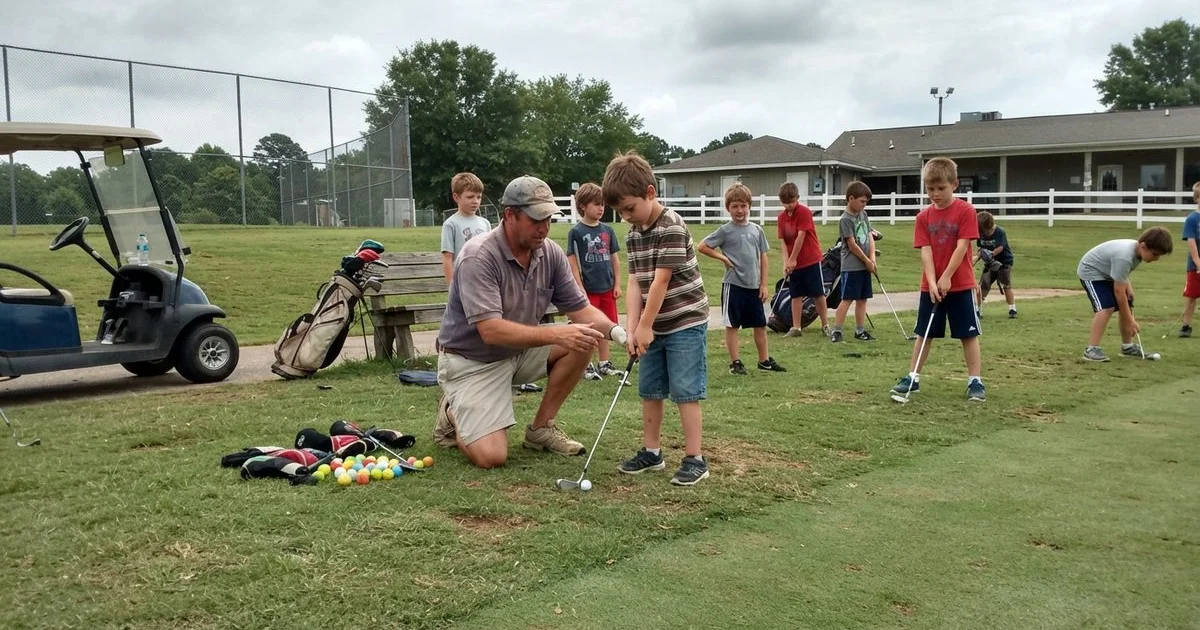
Junior golf instruction in Charlotte isn’t one thing. What works for a six-year-old holding a club for the first time looks nothing like what a competitive fourteen-year-old needs, and picking a program built for the wrong age or stage is a common reason kids lose interest early. Here’s how to match the lesson format to where your child actually is.
Early years: fun first, mechanics later
For kids roughly five to eight, the priority is keeping golf fun and building basic hand-eye coordination, not correcting swing mechanics. Many junior golf programs at this age use modified equipment (shorter, lighter clubs, sometimes oversized or softer balls) and simplified formats designed for shorter attention spans. Look for a program built specifically for this age group rather than a scaled-down version of adult instruction. A coach who treats a six-year-old like a small adult, drilling grip and stance repetitively, tends to burn out interest fast.
| Age range | What to prioritize | Typical format |
|---|---|---|
| 5-8 | Fun, coordination, short sessions | Group classes, modified equipment |
| 9-12 | Fundamentals, basic swing mechanics, introduction to the course | Group or semi-private, some junior camps |
| 13+ | Structured swing work, course strategy, competitive prep if relevant | Private lessons or dedicated junior academy programs |
Middle years: fundamentals start to matter
Once kids are around nine to twelve, most programs shift toward real fundamentals: grip, stance, basic swing mechanics, and an introduction to actually playing holes rather than just hitting balls. This is often when parents start weighing group programs against private or semi-private lessons. Group settings still work well here, especially since the social element (learning alongside peers) tends to keep kids more engaged than one-on-one instruction with an adult coach. If your child is showing real interest and asking to practice outside of lessons, that’s usually a good signal that more individualized coaching would be worth the investment.
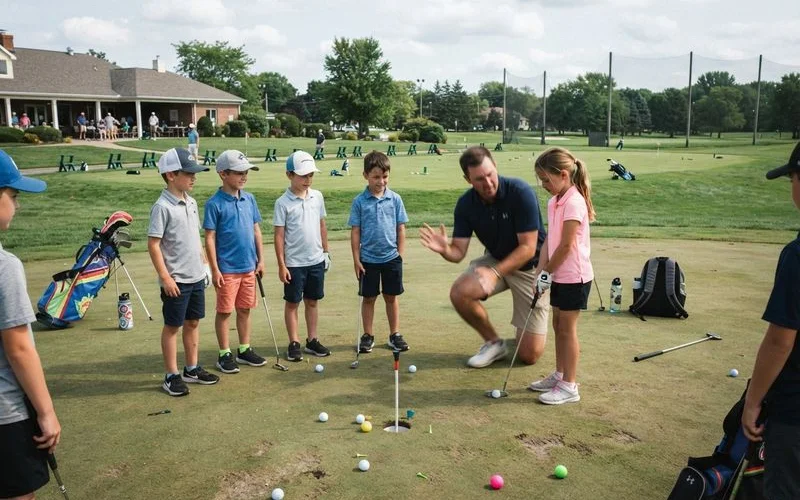
Teen years: matching intensity to interest
By the young teen years, the range widens considerably. Some kids want to keep golf casual and social, while others are ready for structured, more intensive coaching, sometimes with an eye toward high school teams or tournament play. This is the point where a dedicated junior academy program, often built around a longer-term development plan rather than single sessions, starts to make more sense for kids with real interest and commitment. It’s also worth watching for burnout signals. A teen who’s suddenly resistant to practice may need a lighter, more social format rather than more intensive coaching.
What to ask a junior program before enrolling
Ask specifically how the program handles different skill levels within the same class, since a wide age or ability range in one group can leave faster-progressing kids under-challenged and struggling kids overwhelmed. Ask whether instructors have specific experience teaching kids rather than just adults, since the coaching style that works for a focused adult often falls flat with a distracted eight-year-old. And ask what a typical session actually looks like: how much time on the range versus the green, and whether there’s any on-course exposure built in as kids progress.
From casual lessons to a structured academy
Some families eventually move from occasional group classes into a more structured junior academy program, especially once a kid is asking to play more often or showing real interest in improving. Academy programs typically run on a longer development track, sometimes with camps through the school year and summer, and often include some form of progress tracking beyond a single instructor’s memory of last week’s lesson. This step usually makes sense once casual lessons have stuck for a season or two, rather than as a first move for a child who has never held a club.
When to reassess
If your child seems bored, resistant to going, or isn’t progressing despite regular attendance, it’s worth reassessing the format before assuming golf isn’t for them. A switch from a large group class to a smaller one, or from a generalist coach to an instructor who specializes in junior development, sometimes changes everything. Compare junior programs and coaches across Charlotte on the full directory, and see our methodology for how programs are scored on things like instructor experience and verified feedback.
FAQ
- What age can a kid start golf lessons?
- Many Charlotte programs accept children starting around age five or six, often using shorter, lighter equipment and modified formats built for shorter attention spans rather than standard instruction.
- Should my young child start with private lessons or a group class?
- Group classes are usually the better starting point for younger kids. The social element keeps them engaged, and the lower cost per session makes it easier to try golf out without a big commitment.
- How long should a lesson be for a young child?
- Much shorter than an adult session, often 30 to 45 minutes. Younger kids lose focus quickly, and a good junior program builds in variety and short breaks rather than one long block of drilling.
- Does my child need their own clubs?
- Not at first. Most junior programs have loaner clubs sized appropriately for kids, so you can wait to buy a set until you know golf is going to stick.